

Ideological Paralysis
The Left’s Response to Rising Antisemitism

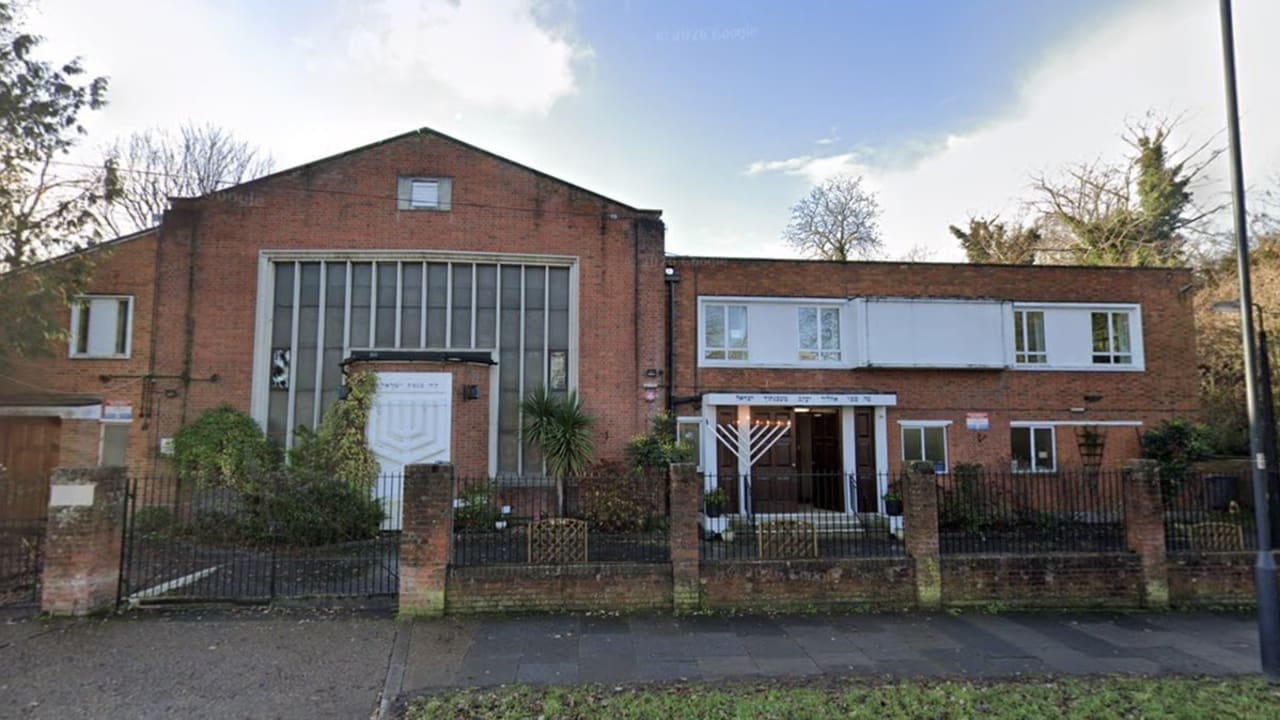
The arson attack on Kenton Synagogue last Saturday – a place I knew well in my youth – is now just another statistic, joining a week that also saw the Finchley Synagogue attacked on Wednesday and the Jewish Futures Building in Hendon targeted on Friday.
That is all in just one week. It comes less than two months after Jewish charity-owned ambulances were torched in Golders Green. Prior to this of course there was the murderous attack on Manchester’s Heaton Park Synagogue in October last year on Yom Kippur which claimed the lives of two Jews. And those are just the headline grabbing attacks. Other incidents have not made big news and other attempted attacks have been thwarted by the authorities.
Everybody knows that antisemitism has made a resurgence in Britain. That anti-Jewish racism is worse now than it ever has been in most people’s living memory. Well not quite everybody. Not the anti-racism experts. I am not the first and certainly won’t be the last to point out that as a rule progressives, anti-racists, left-wingers – whatever label fits – have little useful to say on the matter. That is if they have anything to say at all.
Why do anti-racists find combatting antisemitism so difficult?
It will surprise few that the answer lies in decades of “anti-Zionism” in the anti-racist movement. “Anti-Zionism” is in inverted commas because it is an ideology in itself and has nothing to do with opposition to actually existing Zionism.
I can recall several occasions when the issue caused rifts in the anti-racist movement and on each occasion it played out similarly.
Firstly, Jewish anti-racists/anti-fascists and their allies were accused of failing to grasp contemporary racism. Secondly, attempts were made to sideline them with new anti-racist initiatives from which they were excluded or driven out. Thirdly, a whispering campaign was conducted claiming the Jewish anti-racists were “Zionists.”
It is precisely because of this historic behaviour that the anti-racist left is so incapable of combatting antisemitism.
The Cable Street Formulation
It would take a real contortionist to deny or minimise that Jews experience racial hatred. Yet at the heart of the anti-racist movement are individuals whose skills in that department are circus-level. Of course they profess to oppose all forms of racism, including antisemitism.
There are anti-racists who genuinely believe that Jews are white and privileged and therefore don’t experience racism. How unaware would you have to be of the historic joint fight of Black and Jewish people against racism and antisemitism? How ignorant would you have to be of what Jews are? Did the Civil Rights Movement in the United States and the anti-apartheid struggle in South Africa completely pass them by?
I think there is a notion among some progressives that antisemitism was something that was successfully fought and defeated in the 1930s and 1940s and that any mention of it today has only one purpose, to deflect attention from criticism of Israel. The clincher to prove how well they understand the issue is to say “My Mother/Father/Grandparents were at the Battle of Cable Street” in reference to the historic defeat of the fascists in East London in 1936. I call it the Cable Street Formulation.
Fighting antisemitism
Perhaps Britain’s Trotskyists – for Trotskyists is invariably what they are – have a better understanding of racism than anyone else and deserve to decide anti-racist policy for the movement. They obviously think so, even if I don’t. That isn’t the point though.
The Jewish anti-racists who monitor antisemitism and physically protect their community have a sharper grasp of the threat than the movement at large. In fact, what many activists perceive about antisemitism is inversely proportional to their actual insight. Psychologists call it the Dunning-Kruger effect: a cognitive bias where theoretical comfort masquerades as clarity. By stubbornly applying one-size-fits-all frameworks that ignore the unique, conspiratorial nature of antisemitism, the movement is hitting a structural wall of its own making.
When an ideological project prioritises internal consensus over reality, it ceases to be a tool for progress and descends into an intellectual cul-de-sac. Refusing to understand the specific mechanics of the threat, in favour of a pre-approved, abstract template, is a retreat from the rigour any serious movement requires.
If the goal is to confront reaction, the movement must first confront its own intellectual paralysis. Without the humility to learn from those on the front lines, it will continue to mistake its own narrow, theoretical comfort for an objective understanding of the world, leaving it unable to meaningfully challenge the forces it claims to stand against.
Jews deserve better solidarity than this.